Royal Smash! - Physics Puzzle
Cypher GamesCasual
4.64.30K Reviews
- Version
- 1.18.737
- Installs
- 10.00M
- Age Rating
- Everyone
Screenshots
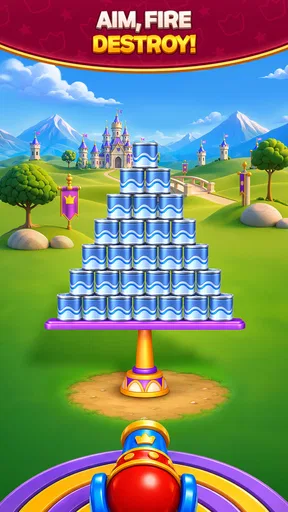
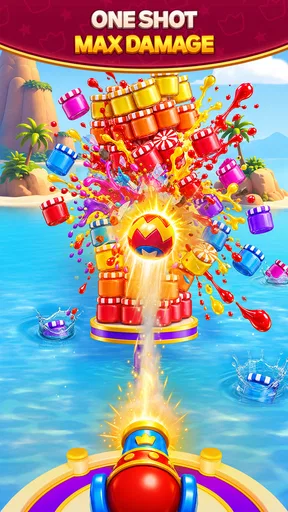
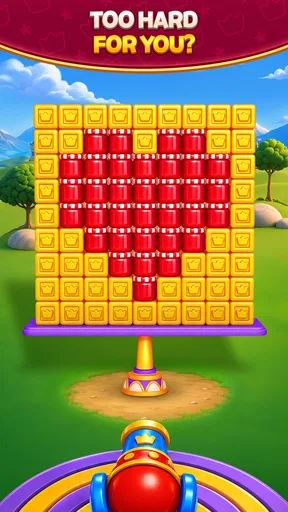
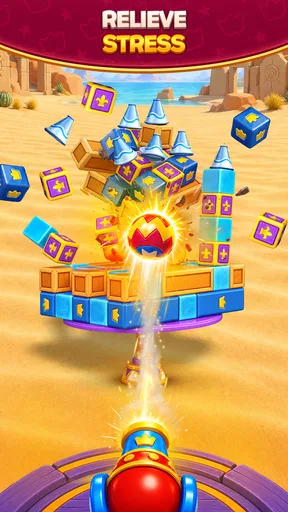
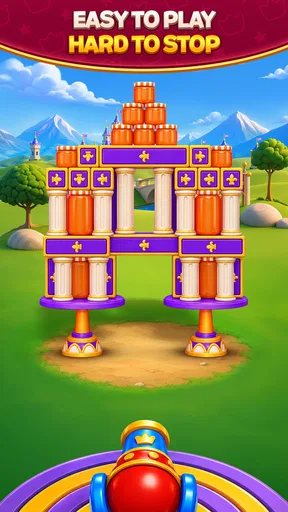
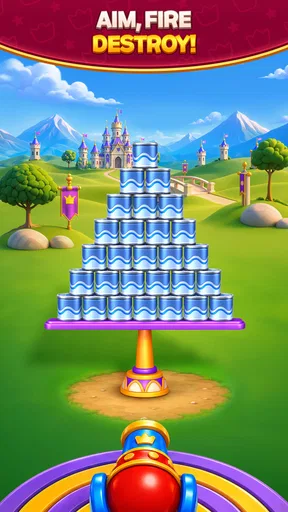
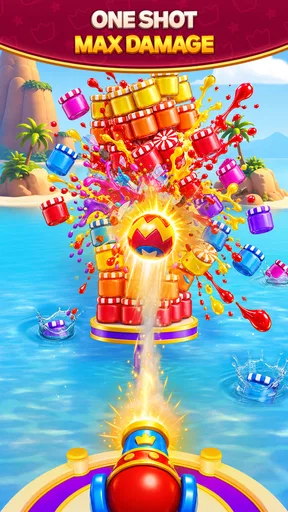
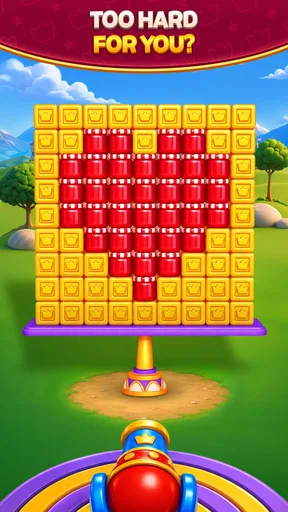
Our Review of Royal Smash! - Physics Puzzle
 Analysis by Appyee
I spent time with Royal Smash! as a quick, casual destruction game, and its appeal became clear almost immediately: it turns a cannon shot into a small physics experiment. You aim, fire, watch structures react, and decide whether the result was satisfying enough to try again or whether a more careful shot could create a better collapse. It is simple to understand, but the pleasure comes from learning how much control you really have over each launch.
That makes it a good fit for short breaks rather than long, story-driven sessions. I can open it when I have a few spare minutes, play without needing to remember a complicated plot, and stop after a handful of attempts. The game is free to download, aimed at Everyone, and works on devices running Android 7.0 or later. Cypher Games has positioned it as a casual game, and that description feels accurate: the focus is immediate interaction, visual feedback, and the enjoyable mess created when a well-placed cannonball meets a fragile-looking target.
How the basic play loop feels in everyday use
The baseline workflow is straightforward. I look at the arrangement in front of me, choose a direction, adjust the shot, and fire. The important part is not simply hitting the largest object. A direct hit may remove one obstacle, while a shot aimed at a support point can cause several pieces to fall. That difference gives the game more thought than its one-finger presentation initially suggests.
My usual approach is to pause briefly before firing instead of treating every level as a reflex challenge. I look for the part of the structure that appears to hold other pieces in place, then consider whether the cannonball can reach it without being absorbed by a less important object. This habit saves attempts and makes the destruction feel earned. When I fire immediately, I often get a visually pleasing impact but a less efficient result.
The physics are the main source of personality. Objects do not merely disappear on contact; the scene reacts, shifts, and breaks in a way that makes each shot feel more physical than a standard matching or tapping game. That does not mean every outcome is perfectly predictable. Small changes in angle can produce noticeably different collapses, which is entertaining when I am experimenting but slightly frustrating when I want a precise solution.
A realistic use case is a commute or a short wait in a queue. I can play with the sound at a comfortable level, take a few shots, and put the phone away without losing the thread of a complicated campaign. It also works well when I want something more active than scrolling but less demanding than a competitive action game. The short-session design is one of its strongest practical qualities.
The trade-off is that this is not the right choice for someone looking for a deep narrative, character development, or a large strategic system. The satisfaction comes from manipulating destruction, not from building a long-term world or managing a detailed collection. If your ideal casual game is a word puzzle with a clear answer, the physics-based uncertainty here may feel less rewarding.
Settings I check before settling into a session
I recommend checking the available in-game settings before forming an opinion about the controls. In a physics game, comfort matters because repeated aiming can become tiring if the input feels too sensitive for your device. I pay attention to whether sound effects are easy to control, whether vibration can be adjusted, and whether the visual presentation feels comfortable in the lighting where I usually play. These are small checks, but they make a noticeable difference during repeated attempts.
Sound is especially useful for this type of game because the impact and collapse provide much of the feedback. I enjoy it when I am playing alone, but I prefer lower volume in public or while listening to a podcast. The game remains understandable without making the audio the center of the experience. That flexibility helps it fit into more everyday situations than a game that depends heavily on dialogue or music.
I also suggest checking how the game behaves when you rotate your phone or switch briefly to another app. Casual games are often used in interrupted moments, and a title that handles interruptions smoothly is easier to keep installed. I do not treat this as a minor convenience: if I expect to be interrupted, I am more likely to play a game that lets me return without feeling punished for stepping away.
Another useful habit is to decide whether you want to play for experimentation or completion before starting. If I am experimenting, I deliberately try unusual angles to see how the structure reacts. If I am trying to progress, I avoid wasting shots on low-value impacts and focus on supports, corners, and objects that connect several parts of the scene. Separating those moods prevents me from blaming the controls when I am actually playing without a clear goal.
The current version is 1.10.244, and the game is free to play, with optional purchases listed from $1.99 to $99.99 per item. That pricing range is worth keeping in mind before spending. I would first establish whether the core loop holds my attention without buying anything. For a game built around quick attempts, a purchase should solve a specific annoyance or support continued enjoyment, not become an automatic response to a difficult level.
Faster patterns that make shots more reliable
After a few sessions, I stopped treating every structure as a completely new problem. Several repeatable patterns helped me play faster. The first is to identify the lowest visible support before aiming at the most obvious target. A large object may attract attention, but the lower connection often determines whether the entire arrangement remains standing.
The second pattern is to prefer a chain reaction when the layout makes one available. I look for a shot that can pass through a weak section and continue into something behind it. This is more efficient than firing separately at several exposed pieces. It also creates the most satisfying moments because the final result feels larger than the initial impact.
Angles near the edge of a structure deserve extra care. A shot that barely clips an object can sometimes move it enough to change the balance, while a central hit may stop the ball and leave the rest untouched. I do not assume that the strongest-looking impact is always the best one. In practice, a controlled glancing shot can be more useful than a direct blast.
I have also found it helpful to use the first attempt as information rather than immediately judging it as a failure. If the ball stops short, I know the path needs more reach or a different entry point. If the upper section shifts but does not fall, I can target the remaining support instead of repeating the same launch. This turns retries into a simple learning process and reduces the feeling of random trial and error.
One non-obvious advantage of playing this way is that I spend less time making tiny aim adjustments. I first decide what kind of result I want: remove a support, create a chain reaction, or open a path. Then I adjust the launch to serve that goal. The decision comes before the finger movement, which makes the controls feel more deliberate and helps me avoid firing several nearly identical shots.
For short sessions, I use a three-step rhythm. I scan the whole scene, choose the most influential contact point, and fire once with a clear purpose. After the impact, I wait long enough to see the full movement before touching the controls again. Firing too quickly can make me misread what changed, especially when pieces continue shifting after the first collision.
This rhythm is also useful for younger players because it encourages observation without making the game feel like homework. The Everyone rating reflects the accessible presentation, and the basic interaction is easy to explain. Still, I would not assume that every child will enjoy the same level of uncertainty. Some players prefer immediate, predictable rewards, while others love watching a structure collapse in an unexpected way.
Where the physics become a real limitation
The same physics that make Royal Smash! entertaining can also limit its precision. When a result depends on several moving pieces, a shot may look correct and still produce a less useful collapse than expected. I consider that part of the design rather than a flaw in every situation, but it matters if you want a puzzle with one exact solution and a strong sense of control.
The game can also feel repetitive if the central pleasure of smashing structures does not hold your attention. There is no point pretending that a satisfying impact alone will entertain everyone indefinitely. Players who need constant changes in rules, a competitive ranking system, or a rich progression layer may eventually want something more substantial. In those cases, a traditional puzzle game may offer clearer goals, while an arcade game may provide more immediate speed and challenge.
Another limitation is the tension between casual play and optional purchases. Because the game is free, it is easy to try without commitment, but I would keep an eye on how often a purchase appears in my own play routine. If I am buying simply because I rushed a shot or became impatient, I would rather close the game and return later. The best experience, in my view, comes from improving the aiming habit rather than paying to remove every moment of friction.
Battery and attention are practical considerations too. Physics-heavy destruction can be visually engaging, but I would not choose it as my default game during a long trip if my phone is already low on power. For a quick break, that concern is minor. For extended play, a simpler puzzle may be a better companion. This is not a criticism unique to the controls; it is a reminder that the game is strongest in the short, focused sessions it naturally encourages.
Players who dislike repeated retries should know what they are getting into. The game rewards observation, but it also expects some willingness to test an idea and adjust it. I enjoy that loop when I have the patience to learn a layout. If I am tired and want a guaranteed success every minute, I find it less suitable. The right choice depends on whether failed attempts feel informative or merely annoying to you.
Who will enjoy it most, and who should choose something else
I would recommend this game to someone who likes tactile casual experiences, visual cause and effect, and short challenges that can be understood without instructions. It is particularly appealing if you enjoy watching a carefully chosen action produce a larger reaction. The cannon gives each level a clear focus, while the destructible arrangements provide enough variation to make aiming more interesting than simple tapping.
It is also a good option for families who want an accessible game that can be handed from one person to another. One player can suggest a target, another can choose the angle, and the result is visible immediately. That makes it easy to discuss without requiring knowledge of a complicated ruleset. The Everyone age rating supports that broad accessibility, although individual preferences about destruction and sound effects will still vary.
I would steer competitive players toward a different category if they need direct opponents, precise leaderboards, or fast reaction tests. Royal Smash! is about the result of your shot, not about proving that you are faster than another person. Likewise, players who want a long-term building system should look for a management or construction game instead. This title gives me a compact physical challenge, not a persistent project.
The audience size suggests that the concept has broad reach: it has passed 5 million installs, carries a 4.6 average from around 224 thousand ratings, and has about 1.4 thousand written reviews. Those figures do not replace personal testing, but they do match my impression that the game is easy to understand and widely approachable. I would still judge it by the specific appeal of its destruction loop rather than by popularity alone.
My verdict after learning the repeatable habits
My strongest recommendation is to play with intention. Scan the structure, identify the support that matters most, and wait for the movement to finish before planning the next shot. That simple routine makes the game feel less like random blasting and more like a compact physics puzzle. It also gives experienced players a practical way to improve without inventing complexity that is not really there.
I appreciate that Royal Smash! does not require a large time commitment. I can use it as a reset between tasks, a light game for a quiet evening, or a shared distraction when someone nearby wants to try a shot. The free entry point makes testing easy, and the broad age rating means it can suit more households than a game built around mature themes or complicated controls.
Its limits are equally clear. The destruction loop may not stay fresh for players who need story, competition, or deep progression, and the physics can occasionally make a carefully aimed attempt feel less predictable than a traditional logic puzzle. Optional purchases also deserve a measured approach. I would not spend until I knew that the basic experience was something I wanted to continue using.
Overall, I see it as a polished casual choice for people who enjoy small experiments with immediate visual feedback. Its real strength is the habit of turning each shot into a question: what is holding this structure together, and can one impact change everything? If that question sounds more inviting than frustrating, Cypher Games’ cannon game is worth trying. If you want a fixed answer, a story to follow, or a competitive match, another type of game will probably serve you better.
Privacy and Permissions
See what permissions an app requests and how it handles your data.
- Wi-Fi connection information
- view Wi-Fi connections
- Other
- view network connections, full network access, control vibration, prevent device from sleeping, Google Play license check, read Google service configuration
Verdict
Strengths of Royal Smash! - Physics Puzzle
- Simple controls make it easy to start playing immediately.
- Physics-based challenges offer varied solutions and creative experimentation.
- Short levels fit well into quick gaming sessions.
- Colorful visuals give the game a light and accessible style.
- Progressive difficulty keeps later puzzles more engaging.
Limitations of Royal Smash! - Physics Puzzle
- Some puzzles may feel trial-and-error rather than skill-based.
- Ads can interrupt the experience, depending on the version.
- The gameplay may become repetitive after extended sessions.
- A few physics interactions can feel inconsistent or unpredictable.
- Replay value is limited once most solutions have been discovered.
Similar Picks in This Category
View All
My Talking Angela
Outfit7 Limited4.2

My Talking Tom
Outfit7 Limited4.3

Pou
Zakeh4.2

My Talking Tom 2: Pet Game
Outfit7 Limited4.3

Candy Crush Saga
King4.6

Bridge Race
Supersonic Studios LTD4.1
Frequently Asked Questions
What is Royal Smash! - Physics Puzzle?
Royal Smash! - Physics Puzzle is a casual puzzle game built around physics-based challenges. You interact with objects, aim shots, and use timing and positioning to solve levels and overcome obstacles. The game is designed for short sessions, making it suitable for players who enjoy simple controls, destructible environments, and progressively more demanding puzzles rather than a complex story or competitive multiplayer experience.
How do you play Royal Smash! - Physics Puzzle?
Gameplay generally focuses on observing the level, deciding how objects should move, and then tapping, dragging, or releasing at the right moment to create the desired reaction. Successful solutions depend on understanding momentum, angles, gravity, and the order in which obstacles are affected. Early stages are easy to learn, while later puzzles require more careful planning and experimentation instead of random moves.
Is Royal Smash! - Physics Puzzle suitable for children and beginners?
The game is relatively easy for beginners to understand because its core mechanics are based on familiar touch controls and straightforward physics interactions. However, some levels can become challenging and may require patience or repeated attempts. Parents should still check the current store rating, advertising content, and in-app purchase information, since these details can vary by device, region, and future updates.
Does Royal Smash! - Physics Puzzle require an internet connection?
The main puzzle experience may be playable without a constant internet connection, which is convenient for travel or quick offline sessions. Nevertheless, an internet connection can be needed for advertisements, analytics, cloud-related features, updates, or restoring purchases. Before relying on offline play, it is best to test the game after disabling mobile data and Wi-Fi, as requirements may change between versions.
Are there advertisements or in-app purchases in Royal Smash! - Physics Puzzle?
Games in this casual puzzle category commonly include advertising, such as banners or videos shown between levels, and may offer optional purchases for removing ads, obtaining hints, or unlocking additional content. Availability and pricing can differ between Android and iOS. Review the official store listing before downloading, and remember that deleting the app does not automatically cancel subscriptions or guarantee a refund.
Play our best games!


